

And for a Friday as monsoon advances, climate change, man-animal conflicts and sustainable development, some thoughts….. some musings…..
The saga of the famous Rogue Elephant – Aarikomban (Rice Tusker) from outskirts of Santapuram in Idukki district of Kerala is poignant and encapsulates the man-animal survival tussles. Elephants are huge herbivorous animals who move in herds of large matriarchal families across vast dense forests and in Kerala, Elephants are revered across all communities with love, affection and huge respect. Aarikomban (Rice-Tusker) as the name suggests was very fond of rice and would attack ration shops on the outskirts of the forest hamlets, eating up mounds of rice, wheat, atta and his delicacy, sugar. Huge controversy – affected tribals and villagers alleged more than 10 human lives were lost and wanted immediate Govt action to annihilate him. Animal lovers, nature conservationists and NGOs swore no harm to Aarikomban and offered many other alternatives. After almost five years of legal battles, finally under High Court supervised rehab scheme, a team of more than 150 forest officials, veterinary doctors and specialists, with help of 4 domestic Kumki Elephants, managed to tranquilse capture and translocate Aarikomban into the deep forest of Villamadallai in Tamilnadu.
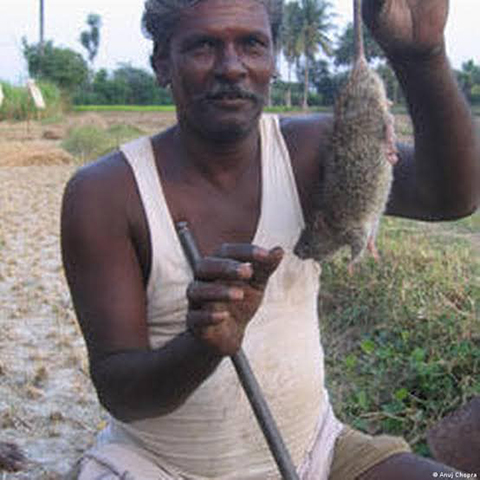
India has unique strengths in its natural capabilities of sustainable living. Across the country farmers, villagers and tribals, live in perfect harmony with nature. Our indigenous communities have developed great skills and these have to be converted into trainable traits and competencies similar to the German Dual education system. Just an example; rodents are a big problem for grain farmers across India and millions of tonnes of food grains are lost to rodents. Rats are profligate breeders. Each female rat will have more than 1000 offsprings in its 3 yrs life span. With millions of farmers having very small land holdings of less than one hectare, rodents are farmers curse. Our farmers are actually propagating organic natural farming. Instead of forcing them to use rat poison and chemicals, we must conceptualise and transponder the special skills of the “Irulas” tribals of South India. They are expert rat and snake catchers. Such is their skills that they can exactly locate rat holes based on rat droppings, smell etc. A skill development programme for young men and women who have failed in 8th/10th standard can be developed. Titled “Sustainable Annihilation (of) Rats and Snakes ( SARS )”, these trained young people can get jobs in every agricultural subdivision in every state in India for catching rats, snakes and producing anti-snake venom.
India has unique rural problems – small land holding, low capital and untrained manpower. We need out-of-box solutions. Distinctive skill sets enable village youth to be employable in rural India itself. Let’s support skill enhancements, the Indian jugaad way, the meaningful way, the SEEGOS way.